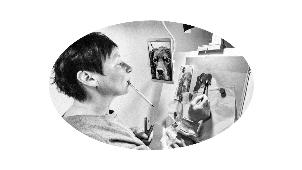



Techniques
When I started drawing in my early years, I only had the choice between graphite and ordinary coloured pencils. Graphite was my favourite when I first started to learn basic drawing techniques. It is the most portable medium and the easiest to master.
Now, of course, I'm working with colour pencils designed for fine art. Unlike graphite and charcoal pencils, their cores are wax or oil-based and contain varying proportions of pigments, additives and binders. They allow precision, control of detail and depth. You can work lightly for a soft look, or with many layers for the effect of oil paint.
Coloured pencils vary greatly in quality, ease of use and, consequently, market price. Brands differ in the concentration of pigments in the core, the light-fastness of the pigments and their durability. First quality and durability are a must when I choose pencils, crayons, pastels, inks or papers, because together with my own skills they have a profound effect on the finished appearance of my work of art.
But why didn't I just stick to crayons? Because many new materials have been invented in recent decades. They promised new perspectives and effects. I wanted to try them out and evaluate their potential, and I was satisfied with many of the results. So I added new techniques, refined them and tried to combine them with others. Today I'm still learning and I don't think I'll ever stop.
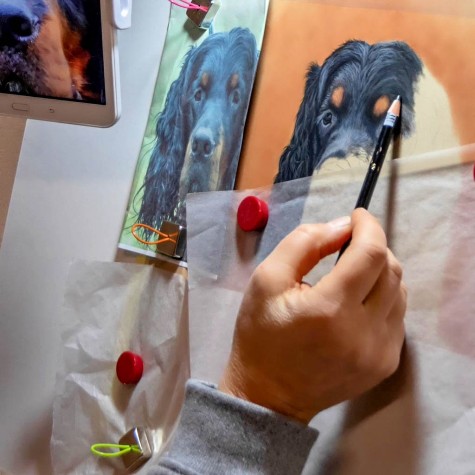
It was a good idea to learn to master pastels. They support my skills in many ways: to achieve a wonderfully rich, velvety texture. The deep, rich colours are easy to blend and, if used well, can have a wonderful luminosity.
When handled correctly, pastels are permanent and can last as long as any other medium. Pastels will never crack, yellow or darken over time. Properly framed and securely hung, they will remain in place for centuries.

Ink wash is a drawing technique that falls somewhere between drawing and painting. Because the medium is wet when applied, many consider ink wash to be a painting technique.
Many ink wash techniques are similar to watercolour painting techniques. As with watercolour, lighter shades of colour are created by diluting the ink with water. One major difference between ink wash and watercolour is that ink wash is a bit more unforgiving. Mistakes made with ink wash are difficult to correct.
Very often my ink paintings are not pure ink wash; I like to combine ink with coloured pencils or even some pastels.
Not all inks are lightfast and tend to fade over time. For me there is no compromise, I either use only lightfast products or protect the finished painting with UV varnish.
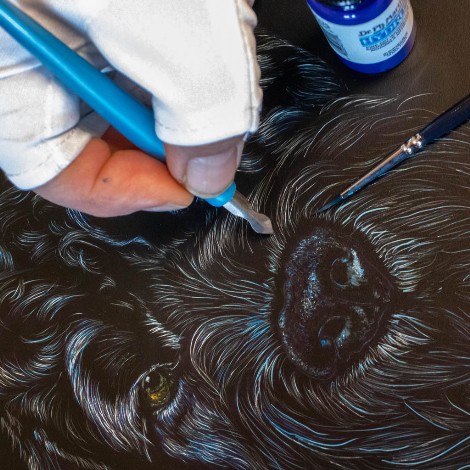
The scratchboard technique is easy to explain: The base is not paper, but a board with a layer of white china clay and (black) Indian ink.
I use a variety of tools to scratch the black ink off the board to reveal more or less of the white clay. Once the black ink has been removed, I add colours and scratch several times to create subtle shades or colour variations. This technique can produce a very detailed graphic image.

Airbrush art is a popular way of painting different designs on a variety of surfaces. At the moment I use the airbrush mixed with the other techniques I master.
The airbrush offers smooth gradations without painterly brush strokes and this is very appealing to me as the only limitation with the versatile airbrush technique is my own ability as an artist.
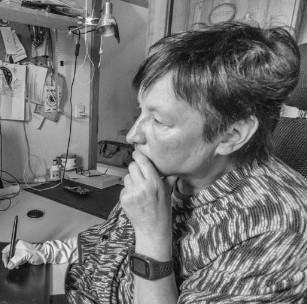
Digital technology combines everything I have created in the traditional way. Actually even more, as I can now combine the most suitable techniques and work in different styles: light on dark (as in the picture), but also photorealistic or with free choice of colours into expressionist.
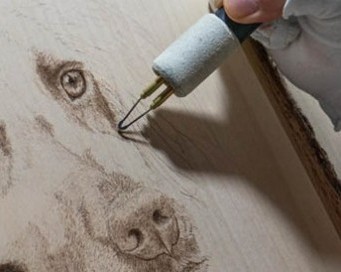
Pyrography: Designs burned on wood are very popular as gifts. A technique I like very much.